
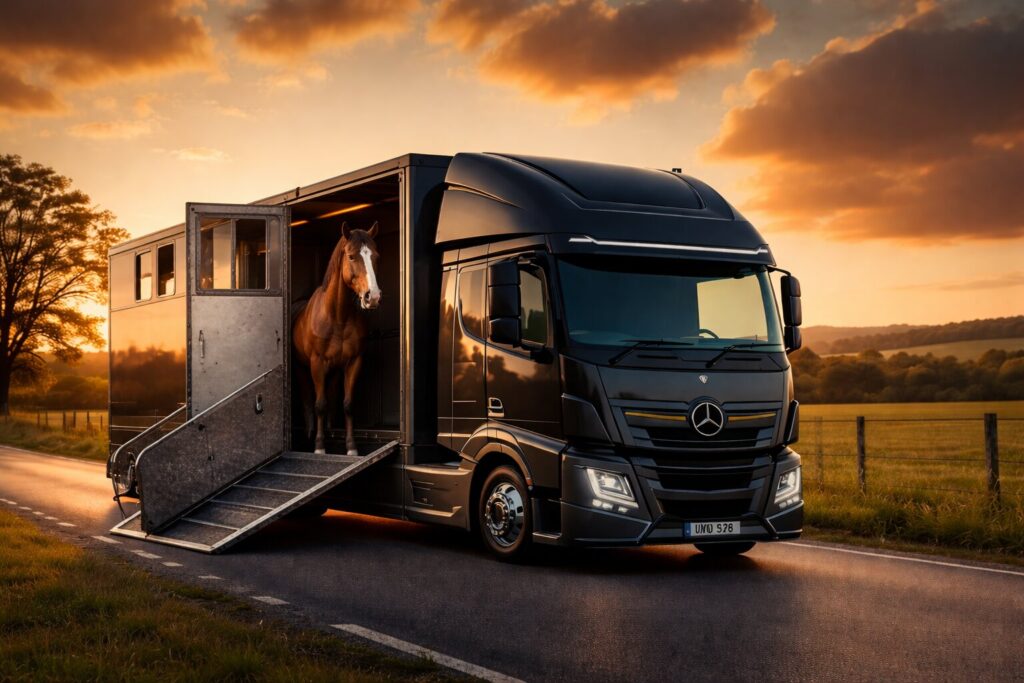
Transporting horses by road requires more than just a suitable vehicle. It involves careful preparation, understanding horse behavior, and maintaining a safe driving environment. Whether you are traveling to competitions, veterinary appointments, or relocating your horse, safety should always be the top priority.
🟠 Understanding Horse Behavior During Transport
Horses are highly sensitive animals, especially when placed in unfamiliar environments like transport vehicles. Movement, noise, and confined spaces can cause stress, even in well-trained horses.
It is important to remember that horses rely heavily on balance. When a vehicle accelerates, brakes, or turns, the horse must constantly adjust its position to stay stable. This is why sudden driving movements can be dangerous.
To reduce anxiety:
- Keep the environment calm and quiet
- Use familiar equipment and routines
- Avoid rushing the loading process
A relaxed horse is far less likely to panic or injure itself during travel.
🟠 Choosing the Right Transport Vehicle
Selecting the proper vehicle is one of the most critical decisions. The two most common options are horse trailers and horseboxes.
Horse Trailers
- More affordable
- Require a towing vehicle
- Ideal for occasional transport
Horseboxes
- More stable and secure
- Often include advanced suspension
- Better for long-distance travel
Regardless of the type, the vehicle must provide:
- Adequate ventilation
- Non-slip flooring
- Strong partitions
- Proper headroom
Investing in a well-designed vehicle significantly improves safety and comfort.
🟠 Pre-Trip Safety Checks
Before every journey, a thorough inspection of the vehicle is essential.
Key areas to check:
- Tires and tire pressure
- Brakes and lights
- Floor condition and matting
- Ramp stability and grip
- Locks and latches
Even minor issues can become serious problems on the road. A quick inspection can prevent accidents and ensure a smooth trip.
🟠 Loading Your Horse Correctly
Loading is often the most stressful part of the process, especially for inexperienced horses.
Best practices:
- Approach calmly and patiently
- Allow the horse to investigate the ramp
- Avoid forcing or pulling
Using positive reinforcement helps build trust and confidence. If the horse resists, take a break rather than escalating the situation.
Once inside:
- Secure partitions properly
- Ensure the horse has enough space
- Tie safely using quick-release knots
A well-loaded horse is more stable and relaxed during transport.
🟠 Driving Techniques for Horse Safety
Driving style plays a huge role in transport safety. Horses feel every movement of the vehicle.
Key driving tips:
- Accelerate gradually
- Brake smoothly
- Take turns slowly
- Maintain a steady speed
Avoid sudden stops or sharp maneuvers whenever possible. Defensive driving is essential when transporting live animals.
Planning your route in advance can also reduce risks. Choose roads with fewer sharp turns, heavy traffic, or poor surfaces.
🟠 Managing Long Journeys
For longer trips, additional precautions are necessary.
Important considerations:
- Schedule regular stops
- Check the horse’s condition
- Offer water when possible
Horses can become fatigued during extended travel. Even short breaks help them recover and stay comfortable.
Temperature control is also important. Ensure proper airflow and avoid traveling during extreme heat whenever possible.
🟠 Hydration and Feeding
Hydration is one of the most overlooked aspects of horse transport.
Horses may refuse to drink in unfamiliar environments, which can lead to dehydration. Offering water at regular intervals is essential.
Feeding should be kept light before travel. A full stomach can cause discomfort, especially during movement.
Providing hay during transport can help keep the horse calm and occupied.
🟠 Post-Travel Care
Once you arrive at your destination, the process is not over.
After unloading:
- Allow the horse to rest
- Check for signs of stress or injury
- Offer water and light feed
Some horses may appear calm but still experience fatigue. Monitoring their condition after travel ensures any issues are addressed early.
🟠 Common Mistakes to Avoid
Even experienced owners can make mistakes during transport.
Avoid:
- Skipping vehicle inspections
- Rushing the loading process
- Driving aggressively
- Ignoring temperature conditions
- Overcrowding the vehicle
Each of these can increase the risk of injury or stress for the horse.
🟠 Final Thoughts
Safe horse transport is a combination of preparation, patience, and responsible driving. Every journey should be approached with careful planning and attention to detail.
By understanding your horse’s needs, maintaining your vehicle, and adopting safe driving habits, you can ensure that every trip is smooth and stress-free.
Whether you are a beginner or gaining experience, following these guidelines will help protect your horse and give you confidence on the road.