
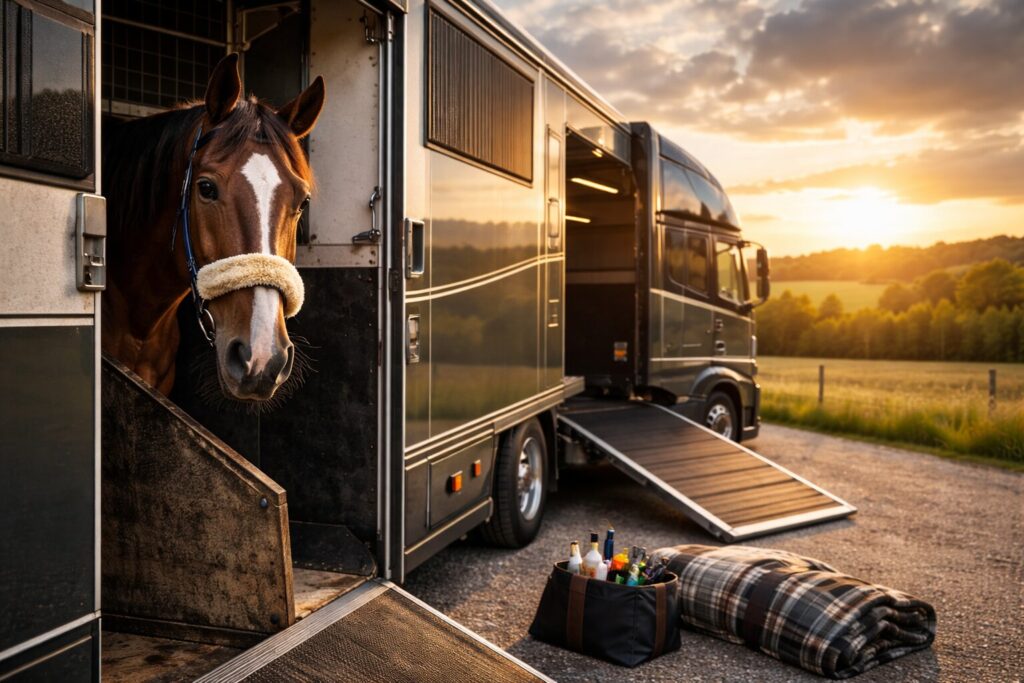
Transporting horses can seem complicated, especially for first-time owners. From choosing the right vehicle to understanding how long a horse can travel, there are many factors to consider. This guide answers the most common questions and helps you prepare for safe and efficient horse transport.
How long can a horse travel safely?
Horses are capable of traveling for several hours, but regular breaks are essential. Most experts recommend stopping every 3 to 4 hours to check on the horse, offer water, and assess its condition.
For longer journeys, planning overnight stops is highly recommended. Extended periods without rest can lead to fatigue, dehydration, and increased stress levels. Monitoring your horse throughout the journey is key to ensuring its well-being.
Do horses need water during transport?
Yes, hydration is extremely important during transport. Horses can lose fluids quickly, especially in warm weather or during stressful situations.
It is best to:
- Offer water before loading
- Provide water during scheduled stops
- Monitor signs of dehydration such as dry gums or lethargy
Some horses may refuse to drink in unfamiliar environments. In these cases, bringing water from home can help encourage them to drink.
Is it better to use a trailer or a horsebox?
The choice depends on your needs, experience, and budget.
A horse trailer is:
- More affordable
- Easier to store
- Suitable for occasional use
A horsebox offers:
- Greater stability on the road
- More space and comfort for the horse
- Additional features such as storage and living areas
For frequent travel or long distances, a horsebox is generally the safer and more comfortable option.
Do horses need to be sedated for transport?
In most cases, sedation is not recommended. Sedatives can affect a horse’s balance, making it more difficult to adjust to movement during transport.
Sedation should only be used if:
- A veterinarian specifically advises it
- The horse has severe anxiety or behavioral issues
Instead of sedation, focus on proper training and a calm loading process.
How should a horse be prepared before travel?
Preparation plays a major role in successful transport.
Before the journey:
- Check the horse’s health and fitness
- Avoid feeding large meals immediately before travel
- Ensure hooves are clean and in good condition
- Use appropriate protective gear if needed
A calm and familiar routine will help reduce stress for the horse.
What should I check in the vehicle before transporting a horse?
Vehicle safety is critical. Before every trip, inspect:
- Flooring for damage or weakness
- Tires for proper pressure and wear
- Brakes and lights
- Ventilation and airflow
- Partitions and locks
Any mechanical issue should be addressed immediately. A poorly maintained vehicle can quickly become dangerous.
How can I reduce stress for my horse during transport?
Horses are sensitive animals and can become stressed during travel. To minimize stress:
- Keep the environment quiet and calm
- Drive smoothly and avoid sudden movements
- Maintain consistent temperature and airflow
- Travel with familiar companions if possible
Consistency and gentle handling make a significant difference.
What is the best driving style for horse transport?
Driving technique is one of the most overlooked aspects of horse transport.
Best practices include:
- Gradual acceleration and braking
- Taking corners slowly
- Maintaining steady speed
- Avoiding rough or uneven roads when possible
A smooth driving style helps the horse maintain balance and reduces fatigue.
Can horses travel alone?
Yes, horses can travel alone, but it depends on the individual animal. Some horses are comfortable traveling solo, while others feel more secure with a companion.
If traveling alone:
- Ensure the horse is accustomed to it
- Provide enough space and stability
- Monitor behavior closely during the journey
What are the most common mistakes in horse transport?
Many issues arise from simple mistakes that can be avoided with proper preparation.
Common mistakes include:
- Skipping vehicle inspections
- Driving too aggressively
- Not planning rest stops
- Overloading the vehicle
- Ignoring signs of stress or discomfort
Avoiding these mistakes greatly improves safety and comfort.
How do I unload a horse safely?
Unloading should be done carefully and without rushing.
Key tips:
- Choose a quiet and safe location
- Open ramps slowly and securely
- Allow the horse to exit at its own pace
- Avoid distractions or loud noises
A calm unloading process prevents accidents and reduces stress.
Final Thoughts
Horse transport is not just about getting from one place to another. It involves planning, attention to detail, and understanding your horse’s needs.
By following the guidelines in this FAQ, you can ensure:
- Safer journeys
- Healthier horses
- Reduced stress for both horse and driver
With the right preparation and approach, transporting your horse becomes a smooth and reliable process rather than a stressful experience.